
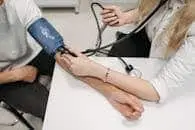
Hypertension — high blood pressure — is the most common chronic condition our home visit doctors manage in Noida. One in three adults in urban India has hypertension, and the majority do not know it. It causes no symptoms until it damages the heart, kidneys, or brain. This guide covers everything you need to manage blood pressure at home effectively — the correct way to measure it, what the numbers mean, which remedies actually work, and the readings that require a doctor at home immediately.
How to Measure Blood Pressure Correctly at Home
Wrong technique is the single biggest reason home BP readings are inaccurate. Follow these steps exactly:
- Rest for 5 minutes before measuring — sit quietly, do not talk
- Empty your bladder first — a full bladder raises BP by 10–15 mmHg
- No tea, coffee, or cigarette for 30 minutes before measuring
- Sit with your back supported, feet flat on the floor, arm resting on a table at heart level
- Place the cuff on bare skin — not over clothing. The lower edge should be 2 cm above the elbow crease
- Take two readings 1–2 minutes apart and average them
- Measure at the same time daily — morning before medication is the most useful reading
- Keep a log — date, time, reading. Show this to your doctor. A single high reading is less meaningful than a pattern
Measure on both arms when you first start. If there is a difference of more than 10 mmHg between arms, consistently use the arm with the higher reading for all future measurements, and inform your doctor — a large difference between arms can indicate arterial disease.
Understanding Your Blood Pressure Numbers
| Reading | Category | Action |
|---|---|---|
| Below 120/80 | Normal | Maintain healthy lifestyle |
| 120–129 / below 80 | Elevated | Lifestyle changes — diet, exercise |
| 130–139 / 80–89 | Stage 1 Hypertension | Doctor consultation, may need medication |
| 140–179 / 90–119 | Stage 2 Hypertension | Medication usually required, monitor daily |
| 180+ / 120+ | Hypertensive Crisis | Call doctor immediately — do not wait |
A reading of 180/120 mmHg or above — especially with headache, chest pain, vision changes, or confusion — is a hypertensive emergency. Call +91-7354618597 or go to hospital immediately. Do not lie down and wait for it to pass.
7 Lifestyle Changes That Genuinely Lower Blood Pressure
1. Reduce sodium — the most powerful single change
Every 1 gram reduction in daily sodium intake lowers systolic BP by approximately 4–5 mmHg. The average Indian diet contains 8–10g of salt daily — target below 5g. Practical steps for Noida families: stop adding salt at the table, reduce pickles and papadums, limit packaged namkeen and biscuits, and use herbs and lemon instead of salt for flavour. Switching from regular salt to rock salt or sendha namak does not reduce sodium significantly — it is still sodium chloride.
2. The DASH diet — proven to lower BP by 11 mmHg
The Dietary Approaches to Stop Hypertension (DASH) diet is the most evidence-backed dietary intervention for hypertension. It emphasises potassium-rich foods that counteract sodium’s BP-raising effect:
- Eat more: banana, coconut water, spinach, sweet potato, dal, rajma, curd, amla, beets
- Reduce: red meat, ghee-heavy food, packaged snacks, restaurant food cooked with excess salt
- Include daily: 4–5 servings of vegetables, 2–3 fruits, 2 servings of low-fat dairy
3. Exercise — 30 minutes of walking, 5 days a week
Brisk walking for 30 minutes lowers systolic BP by 5–8 mmHg — comparable to a low-dose medication. In Noida’s air quality context: walk inside a mall, housing society gym, or on an air filter treadmill during high pollution days (AQI above 150). Morning walks between 6–8am are safest during winter when pollution peaks in the evening.
4. Lose 5kg if overweight
Every kilogram of weight loss reduces systolic BP by approximately 1 mmHg. Losing 5kg can reduce BP by 5 mmHg — enough to take some patients off medication entirely. This is the only intervention where the BP benefit is directly proportional to the result.
5. Reduce alcohol to zero or near-zero
Alcohol raises BP both acutely and chronically. Even 2 drinks per day consistently elevates systolic BP by 5–10 mmHg. The only safe level for hypertension management is none or very occasional.
6. Manage stress — practical Noida context
Noida’s high-density working population has some of the longest commutes in NCR. Chronic commute stress and work pressure are significant BP contributors. Proven interventions that work in 10 minutes or less: 4-7-8 breathing (inhale 4 counts, hold 7, exhale 8), 10 minutes of guided meditation using apps like Headspace, and progressive muscle relaxation before bed. These are not alternatives to medication — they are proven adjuncts that can reduce the medication dose needed.
7. Take medications at the right time — consistently
Most BP medications are once-daily and most effective when taken at the same time every day. Missing doses — even occasionally — causes BP spikes. If you are on amlodipine, take it morning. If on telmisartan or ramipril, bedtime dosing is often more effective at controlling morning BP surge (the riskiest time for heart attacks). Ask your doctor about optimal timing for your specific medication.
Natural Remedies With Evidence — And Those Without
Has evidence:
- Garlic — aged garlic extract (600–1200mg/day) lowers systolic BP by 8–9 mmHg in hypertensive patients. Raw garlic has weaker effect but is safe. Do not take garlic supplements if on blood thinners
- Hibiscus tea (Gudhal) — 3 cups daily shown to lower systolic BP by 6–7 mmHg in several studies. Easy to find in Noida markets
- Amla juice — 20ml daily on empty stomach. Vitamin C and antioxidants shown to reduce arterial stiffness
- Magnesium — through food: spinach, pumpkin seeds, dark chocolate, rajma. Deficiency common in urban Indian diets and linked to hypertension
Does not have strong evidence:
- Ginger tea alone for BP (anti-inflammatory but no direct BP evidence)
- Lemon water (good for hydration, not specifically BP)
- Coconut water (good potassium source, marginal BP effect)
When to Call a Home Visit Doctor for Blood Pressure
- Any reading above 160/100 on two consecutive measurements
- Reading above 140/90 in a pregnant woman — call immediately
- Any reading above 180/110 — hypertensive crisis regardless of symptoms
- High BP with severe headache, vision changes, or chest pain — at any reading
- BP that is well-controlled suddenly spiking despite medication — may indicate an underlying cause
- Patient on BP medication who cannot swallow their tablets due to vomiting
- Newly diagnosed hypertension — home visit to start treatment, explain medication, and set up monitoring routine
Frequently Asked Questions
For most people, hypertension is a chronic condition requiring long-term management rather than a cure. However, significant lifestyle changes — losing 10+ kg, achieving a DASH diet consistently, and sustained exercise — can bring some patients to normal BP without medication. This is more achievable in younger patients with Stage 1 hypertension. For Stage 2 hypertension or patients with organ damage, medication is almost always required alongside lifestyle changes. “Stopping medication because BP is normal” is a common and dangerous mistake — BP is often normal because of the medication.
If newly diagnosed or adjusting medication: twice daily — morning before medication and evening. If well-controlled and stable: once daily in the morning. If consistently normal for 3+ months: 3–4 times per week is sufficient. Always measure at the same time, under the same conditions. Bring your log to every doctor visit — this gives a far more accurate picture than a single clinic reading.
Yes — white coat hypertension is well-documented. Many patients have BP that is 10–20 mmHg higher in a clinical setting due to anxiety. Home blood pressure monitoring is now considered more accurate than clinic readings for this reason. If your home readings are consistently normal but clinic readings are high, discuss 24-hour ambulatory BP monitoring with your doctor — this records BP throughout the day and provides the most accurate baseline.
Yes. Our ApnaDoc home visit doctors in Noida provide complete hypertension management at home — initial diagnosis, prescription, medication review, ECG, and follow-up visits. We also arrange home blood tests for kidney function, lipid profile, and electrolytes — all relevant to BP management. This is particularly useful for elderly patients in Noida, working professionals who cannot attend clinic appointments, and post-surgery patients. Book at apnadoc.in or call +91-7354618597.
Managing blood pressure from home in Noida?
Our MBBS doctors visit for BP check, ECG, medication review and lab tests at home — 24/7 across all Noida sectors, Greater Noida and Indrapuram.