
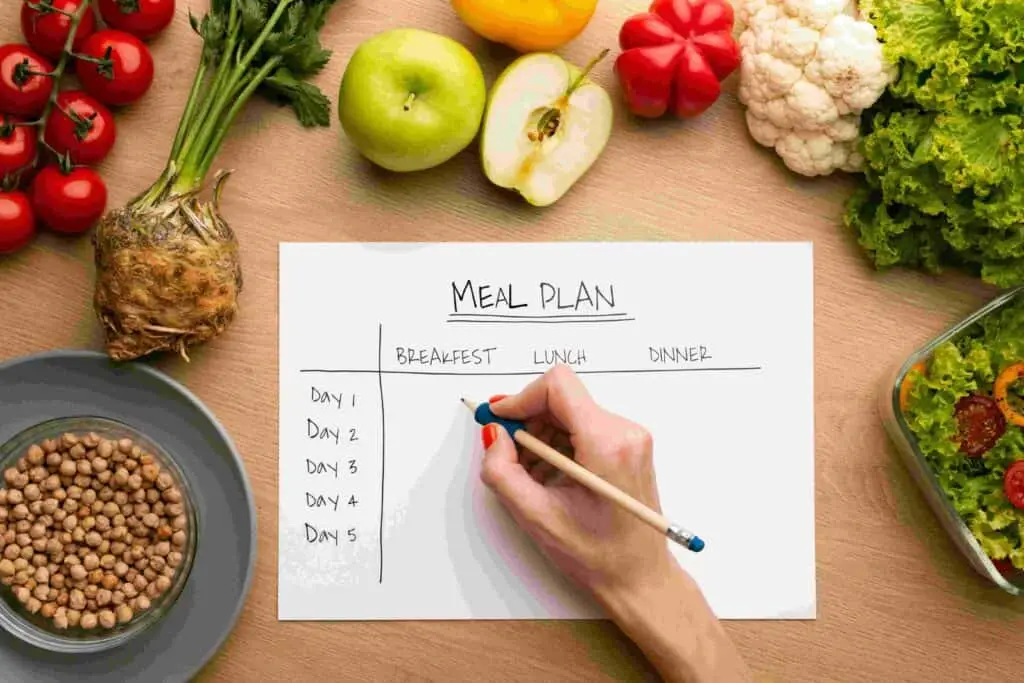
Weight loss advice in India has a problem: most diet plans are written for a generic “Indian” eating pattern that does not match how most urban families in Noida, Greater Noida, or Indrapuram actually eat. Long work commutes, late dinners, office canteen lunches, weekend biryanis, and evening chai with biscuits are the reality. This guide is written by our home visit doctors with that reality in mind — a plan that works within your actual life, not an idealised version of it and best Indian Diet Plan for Weight Loss.
Why Most Indian Diet Plans for Weight Loss Fail
Before the meal plan, understanding why previous attempts failed is more useful than a new list of foods. Our doctors see the same patterns repeatedly in patients who request weight management consultations at home in Noida:
- Cutting roti but not portion size — switching to “no wheat” while eating larger portions of rice, poha, or upma does not reduce total calories. Carbohydrate source matters less than carbohydrate quantity
- Fruit overload — mango, chikoo, and banana are healthy foods but are calorie-dense. Eating 3–4 fruits per day thinking “it’s only fruit” can add 400–600 extra calories
- The dal myth — dal is healthy but not low-calorie when eaten in the quantities most Indian families consume. One large bowl of dal with 2 teaspoons of ghee tadka contains 350–400 calories
- Evening chai culture — 3 cups of masala chai with full-fat milk and 2 teaspoons sugar each adds approximately 300 calories daily — 2,100 calories per week from chai alone
- Weekend eating undoing weekday discipline — one restaurant meal with butter chicken, naan, and a dessert can exceed 1,500 calories, wiping out 3 days of caloric deficit
- Too aggressive a deficit — eating below 1,000 calories per day causes muscle loss, extreme hunger, and metabolic adaptation. The body slows down and weight loss stalls within 3–4 weeks
💡 The single number that matters most
To lose 0.5kg per week (a sustainable, medically safe rate), you need a daily caloric deficit of approximately 500 calories below your maintenance intake. For most moderately active adults in Noida (sedentary office job + light evening walk), maintenance calories are 1,800–2,200 for women and 2,200–2,600 for men. Target: 1,300–1,600 calories per day for women, 1,600–2,000 for men.
The Best Indian Foods for Weight Loss — and Why
High-protein foods (eat more of these)
- Moong dal (split green gram) — the best Indian weight loss food. 100g cooked moong dal has 24g protein and only 105 calories. High protein keeps you full longest per calorie consumed
- Paneer (in moderation) — 100g paneer has 18g protein. But it also has 265 calories. Eat 50–75g portions, not 150g slab portions
- Eggs — one egg = 6g protein + 70 calories. 2–3 eggs at breakfast significantly reduces hunger through the day
- Chicken breast (skinless) — 100g = 31g protein + 165 calories. The most calorie-efficient protein source available in Noida markets and on delivery apps
- Curd / Greek yoghurt — 100g low-fat curd = 4g protein + 60 calories + probiotics for gut health. Replace raita with plain curd at every meal
- Rajma and chhole — 100g cooked = 9g protein + 19g fibre + 127 calories. Fibre significantly slows digestion and extends satiety
High-fibre foods (fill half your plate with these)
- Palak, methi, lauki, tori, ghiya — 100g leafy greens = 20–35 calories. You can eat 300g of sabzi and it contributes less than 100 calories to your total
- Cucumber, tomato, onion, carrot salad — eat a large salad before every lunch and dinner. The fibre slows gastric emptying so you eat less of the heavier calorie-dense components
- Oats — beta-glucan in oats forms a gel in the stomach that extends satiety for 4–5 hours. Overnight oats with curd and 5 almonds is the single most effective Indian weight loss breakfast
- Whole fruits with skin — apple, pear, guava, amla. The skin fibre slows sugar absorption significantly. Avoid juices — you remove the fibre and concentrate the sugar
Healthy fats (eat in measured amounts, not freely)
- Ghee: 1 teaspoon per day maximum — ghee is not the enemy, but it is extremely calorie-dense (42 calories per teaspoon). The traditional “2 tablespoons of ghee on dal” adds 250 calories
- Nuts: 10–15 per day maximum — 10 almonds = 70 calories. A “handful” is 30+ almonds = 200+ calories. Measure, do not guess
- Mustard oil / olive oil for cooking — 1 teaspoon per meal maximum
Foods to Avoid or Dramatically Reduce
| Food | Why it stalls weight loss | Swap with |
|---|---|---|
| Maida (white flour) roti, naan, puri | Rapid blood sugar spike + crash → hunger returns in 90 min | Multigrain atta roti (1–2 max) |
| White rice (large portions) | High glycaemic index, low fibre, 200 cal per small bowl | Half portion + double sabzi |
| Packaged biscuits, namkeen, chips | 50–80 cal per biscuit, nobody eats just one | Makhana (fox nuts) — 50 cal per 20g |
| Full-fat milk chai (3+ cups) | 300–400 calories per day in hidden sugar + fat | Black coffee or green tea |
| Fruit juices | No fibre, concentrated fructose, 120–150 cal per glass | Whole fruit with skin |
| Restaurant food (butter chicken, etc.) | Restaurant meals routinely exceed 800–1200 cal per dish | Home-cooked dahi chicken |
| Mithai, halwa, gajar ka halwa | 300–500 cal per small piece, almost no protein or fibre | 1 small piece dark chocolate 70%+ |
| Aloo in everything | Aloo paratha = 350+ cal each; aloo sabzi doubles calorie count | Replace with cauliflower or lauki |
7-Day Indian Diet Plan for Weight Loss
This plan targets 1,400–1,600 calories per day for women and 1,700–1,900 for men (adjust roti quantity). All meals use ingredients easily available in Noida markets and on grocery delivery.
Day 1 — Monday (Reset day)
- On waking (6–7am): 2 glasses warm water + ½ lemon squeezed in
- Breakfast (8am): 2 moong dal chilla + 1 tbsp green chutney + 1 cup black coffee / green tea
- Mid-morning (11am): 1 apple with skin
- Lunch (1pm): 1 multigrain roti + 1 bowl palak dal + 1 cup curd + large cucumber-tomato salad
- Evening (4pm): 20g makhana + 1 cup green tea (no sugar)
- Dinner (7:30pm): 1 bowl moong dal soup + 2 cups stir-fried vegetables (no oil — dry sauté or steam)
- Approximate calories: 1,380
Day 2 — Tuesday (Protein focus)
- On waking: 2 glasses warm water
- Breakfast (8am): 3 scrambled eggs (1 whole + 2 whites) + 1 slice multigrain toast + 1 cup black coffee
- Mid-morning (11am): 1 guava or 1 pear
- Lunch (1pm): 150g grilled chicken breast + 1 bowl rajma (small) + large salad with lemon dressing
- Evening (4pm): 100g low-fat curd + 5 almonds
- Dinner (7:30pm): 1 multigrain roti + 1 bowl mixed sabzi (lauki + tori) + 1 cup curd
- Approximate calories: 1,520
Day 3 — Wednesday (Fibre day)
- On waking: 2 glasses warm water + 1 tsp isabgol (psyllium husk)
- Breakfast (8am): Overnight oats — 50g oats + 150ml low-fat curd + 5 almonds + 1 tsp seeds (sabja/chia)
- Mid-morning (11am): 1 small bowl papaya
- Lunch (1pm): 1 multigrain roti + 1 bowl chhole (small, less oil) + large salad + 1 cup buttermilk (chaach, no salt)
- Evening (4pm): 1 cup green tea + 2 rice cakes
- Dinner (7:30pm): Large bowl vegetable soup (tomato, carrot, celery, beans) + 1 multigrain roti
- Approximate calories: 1,450
Day 4 — Thursday (Vegetarian protein)
- On waking: 2 glasses warm water
- Breakfast (8am): 2 besan cheela + 2 tbsp curd dip + 1 cup black coffee
- Mid-morning (11am): 1 banana (small)
- Lunch (1pm): ½ cup brown rice + 1 bowl dal + large salad + 75g paneer bhurji (no oil / minimal oil)
- Evening (4pm): 1 cup chaach + 10 almonds
- Dinner (7:30pm): 2 multigrain rotis + 1 bowl methi sabzi + 1 cup curd
- Approximate calories: 1,550
Day 5 — Friday (Lower carb day)
- On waking: 2 glasses warm water + green tea
- Breakfast (8am): 2 eggs any style + 1 cup sautéed spinach + 1 cup black coffee
- Mid-morning (11am): 1 orange or 2 amlas
- Lunch (1pm): Large bowl dal with extra vegetables + large salad — no roti or rice today
- Evening (4pm): 30g roasted chana + 1 cup green tea
- Dinner (7:30pm): Grilled fish or chicken (150g) + steamed vegetables + 1 cup curd
- Approximate calories: 1,320
Day 6 — Saturday (Flexible day)
- On waking: 2 glasses warm water
- Breakfast (9am): Poha (1 cup cooked, minimal oil) + 1 cup green tea
- Lunch (1pm): 1 multigrain roti + 1 bowl sabzi + 1 bowl dal + salad + curd — this is your larger meal
- Snack (4pm): 1 fruit of choice
- Dinner (7:30pm): Light — 1 bowl khichdi (moong dal + rice, small portion) + 1 cup curd
- Cheat allowance: 1 small portion of a favourite food — not a full cheat meal. 200–300 extra calories, not 1,000
- Approximate calories: 1,600
Day 7 — Sunday (Reset and meal prep)
- On waking: 2 glasses warm water + 1 tsp methi seeds soaked overnight
- Breakfast (9am): Idli (2–3) + sambar (dal-based) + 1 cup green tea
- Lunch (1pm): 1 bowl rajma chawal (small rice portion) + large salad + curd
- Snack (4pm): 20g makhana + 1 cup green tea
- Dinner (7:30pm): 2 multigrain rotis + 1 bowl dal palak + 1 cup curd
- Approximate calories: 1,500
⚠️ Important — adapt this to your actual eating pattern
This plan is a framework, not a prescription. If you eat dinner at 10pm instead of 7:30pm, shift all meals 2 hours later — the timing relative to each other matters more than the absolute clock time. If you are vegetarian, replace chicken/egg meals with additional paneer, dal, or rajma portions. If you have diabetes or kidney disease, do not follow this plan without first consulting a doctor.
The 5 Non-Diet Factors That Determine Whether You Lose Weight
Diet is only one variable. Our doctors consistently see patients who eat well but do not lose weight because of these overlooked factors:
1. Sleep — the most underrated weight loss tool
Less than 6 hours of sleep per night increases ghrelin (hunger hormone) by 28% and decreases leptin (fullness hormone) by 18%. Noida’s working professionals who sleep 5–6 hours due to late-night screens are fighting a hormonal battle against weight loss that no diet can fully overcome. Prioritise 7–8 hours — this is not negotiable if weight loss is the goal.
2. Stress and cortisol
Chronic work stress raises cortisol, which directly increases abdominal fat storage and drives cravings for high-sugar, high-fat foods. This is why Noida IT professionals often gain weight during project delivery periods despite being “trying to diet.” Managing stress via 10 minutes of daily deep breathing, evening walks, or yoga has a measurable impact on cortisol and therefore on body weight.
3. Thyroid function — frequently missed
Hypothyroidism (underactive thyroid) is extremely common in women and causes weight gain and inability to lose weight despite correct diet and exercise. If you have been following a calorie-controlled diet for 6+ weeks without any weight change, ask your doctor to check TSH, T3, and T4. This is a simple blood test our doctors can arrange at home in Noida from ₹299.
4. Insulin resistance
Insulin resistance — a precursor to diabetes — causes the body to store fat more aggressively even in a caloric deficit. HbA1c and fasting insulin tests can diagnose this. It is highly prevalent in urban Indian adults over 35, particularly those with central obesity (belly fat). Diet modification for insulin resistance is different from standard weight loss dieting — a doctor’s guidance is important.
5. Eating speed
The brain takes 20 minutes to register fullness. Eating a meal in 7 minutes — common during office lunch breaks — means you have already overeaten by the time the satiety signal arrives. Eating slowly (putting the spoon down between bites, chewing 20+ times) consistently reduces meal intake by 15–20% with no other change.
When to See a Doctor for Weight Loss in Noida
- BMI above 30 — medical supervision significantly improves safety and outcomes at this level
- No weight change after 6+ weeks of genuine caloric restriction — thyroid or hormonal evaluation needed
- Rapid unexplained weight gain — requires evaluation to rule out thyroid, PCOS, Cushing’s syndrome
- Any history of heart disease, kidney disease, or diabetes — standard weight loss diets are not safe without modification
- Extreme fatigue, hair loss, or cold intolerance during weight loss — signs of nutritional deficiency or thyroid dysfunction
Frequently Asked Questions
How much weight can I realistically lose in 1 month on an Indian diet? +
A medically safe and sustainable rate is 0.5–1kg per week, or 2–4kg per month. Losing more than this typically involves muscle loss alongside fat, which slows metabolism and makes long-term maintenance harder. Plans promising 10kg in a month are invariably unsafe — extreme restriction causes gallstones, nutritional deficiencies, and rebound weight gain. Aim for 3kg in the first month (some is water weight) and 2kg per month thereafter.
Is rice bad for weight loss in an Indian diet? +
Rice is not inherently bad — portion size is the issue. A small portion of rice (½ cup cooked, approximately 100 calories) as part of a meal with dal and sabzi is perfectly compatible with weight loss. The problem is that most Indian meals use 1.5–2 cups of rice, which is 300–400 calories from rice alone before anything else on the plate. Halve your rice portion and double your sabzi and salad, and rice becomes manageable in any weight loss plan.
Should I follow intermittent fasting on an Indian diet plan? +
Intermittent fasting (typically 16:8 — eating within an 8-hour window) works for many people because it simplifies calorie restriction without requiring calorie counting. It is compatible with Indian eating patterns — a 12pm–8pm eating window fits well with Indian lunch and dinner times. However, it is not superior to a regular calorie-controlled diet when total calories are matched. Choose whichever approach you can sustain for months, not weeks.
Is ghee completely off-limits in a weight loss diet? +
No — ghee is a nutrient-dense fat with beneficial short-chain fatty acids and fat-soluble vitamins. The issue is quantity, not ghee itself. 1 teaspoon of ghee per day (42 calories) is reasonable and adds significant flavour and satisfaction to meals. The traditional Indian habit of adding 2–3 tablespoons of ghee to everything (150–180 calories) is what causes the problem. Keep it to 1 teaspoon per day, used strategically on the most satisfying part of your meal.
Can a home visit doctor help with weight loss management in Noida? +
Yes. ApnaDoc home visit doctors in Noida provide weight management consultations at home — including BMI measurement, body composition assessment, thyroid and diabetes screening, and personalised dietary guidance. We can also arrange home blood tests (thyroid panel, HbA1c, lipid profile, vitamin D) relevant to weight management. For patients with obesity (BMI above 30), medical supervision significantly improves safety and long-term outcomes. Book at apnadoc.in or call +91-7354618597.
Weight not moving despite dieting? Get checked at home.
Thyroid dysfunction, insulin resistance, and hormonal imbalance are the hidden reasons most Indian diets fail. Our MBBS doctors visit your home in Noida for a complete metabolic evaluation — 24/7, starting ₹1250.